Skip to content

Journal Art Tips
Too Old to Be an Artist? You Are Not Late, You Are Invisible
You are not too old to be an artist. You are just invisible, and unlike your age, that is fixable. Here is how to be seen at any age.
In this article 5 sections
Nobody tells the older artist the truth, so I will. You are not too old to be an artist, and you have not missed your chance to build a career from your work. What you probably are is invisible. That sounds harsher than it is, because unlike your age, invisibility is something you can fix.
I hear the same worry again and again from artists who started late, came back to painting after years away, or spent decades raising a family or holding down a job before they could make work properly. They look at younger artists online and quietly decide the window has closed. I first talked about this in a video on Instagram, and I want to go further here, because the belief that you are too old is one of the most expensive beliefs an artist can hold. It costs you the career you could still have.
Is it too late to start an art career at 40, 50 or 60?
No. Here is the simplest way I can put it. The artist who gets discovered at fifty did not suddenly become more talented than they were at thirty. They got seen. Somebody finally found the work, and the work finally had a person attached to it.
That is what discovery actually is. It is not a prize handed out for youth or for raw ability. It is the moment when good work becomes findable and there is a real human being behind it that people can connect with. Age does not stop that moment from happening. Hiding does.
I have watched too many brilliant artists quit in their forties and fifties because they decided the window had closed. It hadn’t. They just couldn’t bear to be visible, so they called it being too late instead.
I understand why. Too late sounds like a fact. It sounds like something outside your control, something nobody could argue with. Being afraid of being seen sounds like a choice, and choices are uncomfortable to own. So if you have been telling yourself you are too old, it is worth asking honestly which one it really is. If the answer is fear, that is good news, because fear is something you can work through. A birth certificate is not.
Do galleries and collectors care how old you are?
A gallery does not check your age. A collector does not check your age. What they check is much simpler: can they find you, and does the work make them feel something?
When a gallery looks at an artist, the questions are practical. Is there a coherent body of work? Is there a clear sense of who made it and why? Is there evidence that this person keeps showing up and keeps making? None of those questions have anything to do with the year you were born.
Collectors are the same. People buy original art because a piece moves them, and very often because they feel some connection to the person behind it. They want to know the story. They want to feel they have met you, even if only through a screen. A long life lived before you picked up a brush is not a weakness in that story. It is often the most interesting part of it.
Visibility has no expiry date. Talent that nobody can see does.
Why do so many older artists feel invisible?
Part of it is the way the art world talks. You hear the word emerging everywhere, and it is easy to read it as young. But in most contexts emerging describes where you are in your career, not how many birthdays you have had. You can be an emerging artist at sixty.
Part of it is social media. Scroll for five minutes and it can feel like a space built for twenty year olds. It isn’t. The platforms do not care how old you are. They care whether you post, whether people stop for your work, and whether they come back. Those are all things you can influence.
And part of it, if I am honest, is habit. If you spent years believing the work should speak for itself, putting yourself forward can feel unnatural, even a bit vulgar. But the work cannot speak if nobody is in the room to hear it. Being visible is not showing off. It is simply giving your paintings a chance to reach the people they were made for.
How do you become visible as an artist at any age?
You start today, at whatever age you are. There are three parts to it, and none of them require you to be young, connected or technically gifted with social media.
1. Put the work where it can be found. If someone heard your name tomorrow and searched for you, what would they find? Ideally a simple website with your name, clear photographs of your work, sizes and a way to contact you, plus an Instagram account that is obviously about your art. Beyond that, enter open calls, show work locally, and tell the people around you what you make. Work kept in the studio or a drawer is safe, but it is also silent. I have written more about this in my piece on how to get discovered as an artist.
2. Put your face and your story next to it. People follow the person, not just the painting. This is the step most artists resist, and it is the one that makes the biggest difference. Show your hands working. Talk to the camera for thirty seconds about why you painted something. Write a few honest lines about what came before your art and why you are making it now. Your later start is not something to hide behind a polished feed. It is part of what makes your work yours.
3. Show up long enough to be remembered. Visibility is not one brave post. It is being there week after week until people recognise your work before they see your name. Choose a rhythm you can actually keep for a year, even if it is only once or twice a week, rather than a burst you will abandon in a month. Most artists give up long before anyone has had the chance to notice them.
That is the whole game. It is not complicated, but it does ask you to be seen, which is exactly the thing the too old story was protecting you from.
What can you do this afternoon?
You do not need a plan for the next five years to begin. You need one small act of visibility today. Here are a few you could do in the next couple of hours:
- Photograph three finished pieces in good daylight, straight on, with nothing distracting around them.
- Write two or three sentences about why you make the work you make, in the words you would use with a friend.
- Post one piece online with your face or your hands somewhere in the frame, and say something true about it.
- Send one image to one person who could help it be seen: a local café, a friend with a wide circle, or an open call you have been putting off.
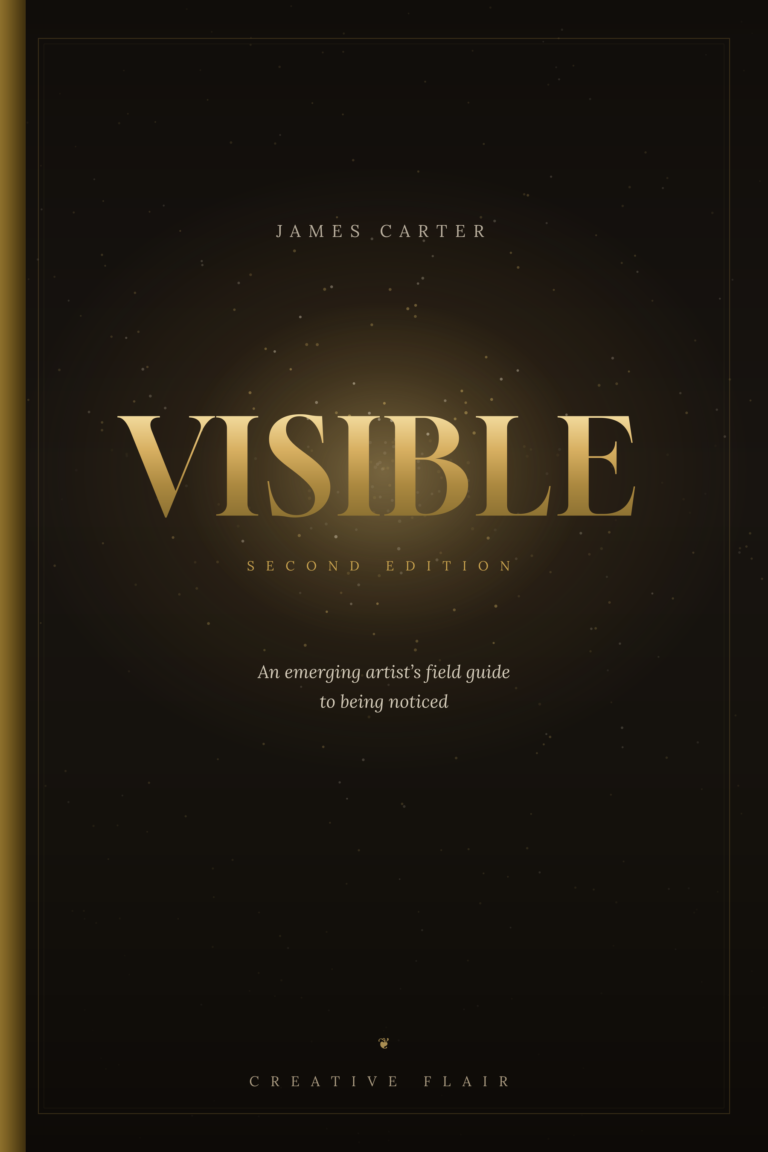
None of these will change your life on their own. Together, and repeated, they are how an invisible artist becomes a visible one. If you want the full step by step system for getting your work seen and building an audience, however long you have been making art or however late you feel, it is exactly why I wrote my book VISIBLE.
Your age is not the thing standing between you and an art career. Being unseen is, and that is something you can start changing before the end of today. Put the work where it can be found, put yourself next to it, and keep showing up. You can begin this afternoon.