Skip to content



In this article 6 sections
For decades the deal for artists was simple. You made the work, then you waited to be picked. A gallery, a prize, a critic: somebody had to anoint you before anyone else was allowed to take you seriously.
That world is gone, and most artists have not noticed. The art market has quietly stopped gatekeeping. Collectors are finding artists on social media and buying from the ones they feel connected to, not the ones an institution approved first. The gate is open. Almost nobody is walking through it.
If you have ever wondered how to get discovered as an artist, this is the answer now, and it is not the one you were taught. I first talked about this in a video on Instagram. Here is what changed, why it matters for you, and what to actually do about it.
What does it mean that the art market stopped gatekeeping?
Gatekeeping is the old system where a small number of people decided who got seen. A gallerist chose who to show. A prize panel chose who to shortlist. A critic chose who to write about. If none of them chose you, your work stayed in the studio, however good it was.
That system still exists, and galleries and prizes still matter. What has changed is that they are no longer the only door. The market reports this year say it bluntly: collectors are discovering artists through social media and buying on personal connection. They are not waiting for an institution to tell them who is worth backing. They are deciding for themselves, based on the work they see and the artists they feel they know.
That is the shift. Permission used to be the first step. Now it is optional. The question is no longer “who will pick me?” It is “who can find me?”
Why are less talented artists getting ahead?
This is the hard part, and it is the bit people argue with me about. The artists winning right now are not the most talented. They are the most visible.
That can feel unfair if you have spent years refining your technique. But think about it from the collector’s side. A collector cannot buy a painting they have never seen, from an artist they have never heard of. Talent hidden in a studio is invisible by definition. Visibility is not a replacement for good work. It is what lets good work reach anyone at all.
The artists doing well are the ones who let people find them, follow them, and watch the work happen. They show pieces before they are finished. They talk about why they make what they make. They let an audience into the process, so that by the time a piece is done, someone already cares about it.
If you are more talented than the artists you see succeeding, that is good news. It means the gap between you and them is not skill. It is something you can start fixing this week.
How do collectors find artists on social media?
Collectors find artists the same way anyone finds anything online. They come across something that stops them, then they go looking for more. A reel in their feed. A painting a friend shared. A search for a subject they love.
What happens next decides whether they stay. They land on your profile and ask, consciously or not, a few quick questions. Is this work consistent? Is there a real person behind it? Is this artist still making things?
That is why the market now rewards coherent, sustained practices. One great painting posted once, followed by months of silence, gives a collector nothing to follow. A body of work that builds over time, with the person making it visible alongside it, gives them a reason to stick around and, eventually, a reason to buy.
In practical terms, that means:
- Post work that clearly belongs together, so a new visitor understands what you do within a few seconds.
- Keep showing up over months, not in bursts just before an exhibition.
- Make it obvious how to contact you or buy from you.
- Let people see you, not just the finished pieces.
How do I become more visible as an artist without feeling fake?
Most artists I speak to are not lazy. They are uncomfortable. Showing your face, talking about your work, posting something that is not finished: it all feels like showing off.
But being visible is not about performing. It is about removing the wall between your work and the people who would love it. Here is how to start.
Stop polishing in private. If you wait until a piece is perfect before anyone sees it, most of your work never gets seen. Share the process. The first marks, the mistakes and the half finished canvas are often more interesting to an audience than the final image, because they show how the work is made.
Show the person making it. Collectors buy on connection, and connection needs a person. You do not have to become an influencer. A few seconds of your hands at work, or one sentence about why you chose this subject, is enough to turn a picture into a story.
Post like someone who has decided to be found. Write captions that say what the work is, what it is about and whether it is available. Use the words people would actually search for. Tell people what to do next, whether that is following you, getting in touch or joining your mailing list.
Stop waiting for permission. Nobody is going to email you to say you are now allowed to call yourself an artist and start selling. If you are waiting for that message, it is not coming. You can give yourself permission today.
If showing up online feels like selling out, I wrote about that exact worry in Instagram for Artists: Being Visible Is Not Selling Out.
Do I still need a gallery to sell my art?
Galleries still do valuable things. They put work in front of serious buyers, handle sales and build an artist’s reputation over time. If a good gallery wants to work with you, that can be a brilliant thing.
The difference now is that you do not have to wait for one before your career can start. You can build an audience, sell directly and develop relationships with collectors on your own terms. And when a gallery does come along, an artist who already has people following the work is a far more interesting prospect than one waiting to be discovered from scratch. Visibility does not compete with galleries. It makes you easier to say yes to.
Where should I start this week?
You do not need a new strategy or a new account. You need to become findable. Here is a simple place to begin:
- Look at your profile the way a stranger would. Is it clear what you make and how to reach you? Fix anything that is not.
- Choose the body of work you want to be known for and put it at the centre of what you post.
- Share one piece of process this week, not just a finished image.
- Say one honest thing about why you make the work you make.
- Commit to showing up regularly for the next three months, then judge the results.
None of that needs talent you do not already have. It needs the decision to be seen.
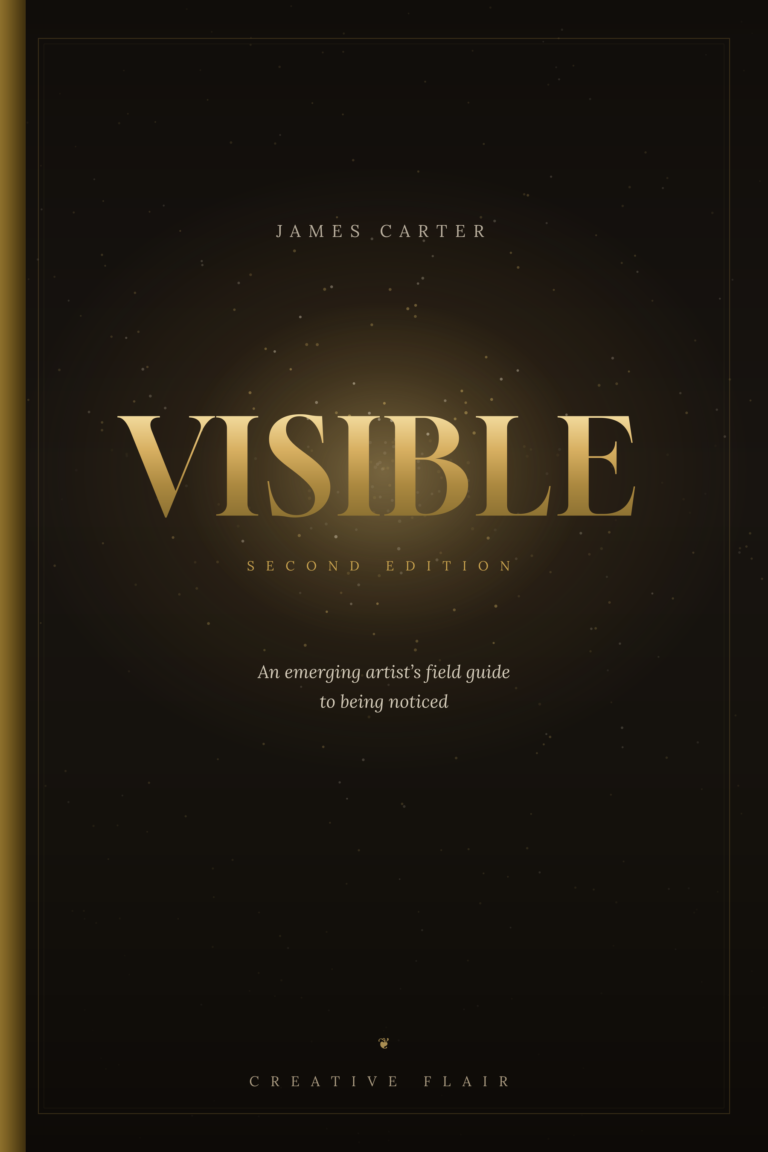
This shift is the entire reason I wrote my book VISIBLE. It is the step by step system for becoming the artist people discover and back now, instead of the one still waiting in the queue.
The old deal asked you to wait. The new one asks you to show up. The gate is open, and most artists are still standing outside it, polishing work nobody can see. Walk through it.