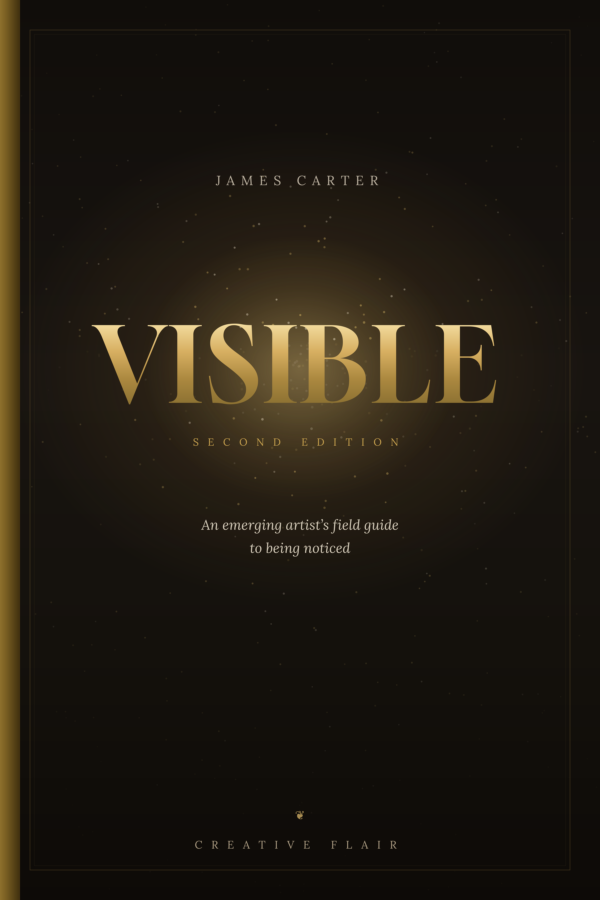
A field guide to the part nobody teaches: how visibility actually works for artists, and how to build it on purpose. Thirty chapters, twelve appendices you fill in and use, and one argument held from the first page to the last.
£39· One payment, no DRM. The price goes to £49 when the audiobook lands, and everyone who already owns VISIBLE gets it free. More than 590 artists have bought it here.
✓ Instant download✓ 30 day money back guarantee✓ 12 worksheet workbook✓ Free updates for life✓ Audiobook free when it lands
Or read chapter one, free.
PDF · No cost
It names the ten things sitting around your work, and lets you score yourself against them. Most artists have never once looked at that number.
✓
You're in.
Chapter one is on its way to your inbox. You can open it straight away below.
27 diagrams · 41 problem index · 12 worksheet workbook
5 years
Inside the art world, working with emerging artists
600+
Emerging artists interviewed
Goldsmiths
Fine Art & History of Art
229k
Followers across platforms
4.9 ★
From 15 reader reviews
The actual problem
You are good enough. That is not the problem.
The problem is the ten things sitting around your work, quietly deciding whether anyone ever sees it.
Most artists are told the same thing. Make better work. Be patient. The right people will find you.
This book is for everyone who has tried that and is still invisible.
The work is necessary. The work is not sufficient. Good work that reaches nobody is a private hobby.
There are ten things sitting around the work that quietly decide whether anyone ever sees it. None of them require you to be more talented than you already are. Almost nobody is going to teach you them.
Nobody taught you them. Almost nobody will. And every year they go unfixed is a year your best work spends in a rack, facing the wall.
This is the most important twenty minutes in the book, and you can do it right now, for nothing. Answer honestly. Nothing is stored, nothing is sent, and nobody sees the number but you.
Photographs of the work. Good enough that the image does the work justice.
A statement that says something. A few plain sentences a stranger could repeat.
A website you actually own. Findable in ten seconds, not rented from a platform.
A coherent body of work. Three pieces that clearly belong together.
A presence where the gatekeepers look. A grid that argues for you before you speak.
A habit of applying. Regularly, to well chosen things, not in a panic.
A price that signals seriousness. Consistent everywhere, and defensible.
A list of people who want to hear from you. Owned, not rented.
A record you keep. One place with everyone you have met and everything you have done.
Relationships you tend. Tended over years, not mined when you need something.
Nothing was stored and nothing was sent. That number is yours. It is also worksheet one of twelve, and it comes with the book.
Why I wrote it
I know exactly how this feels.
You finish something you are proud of. You post it. Forty seven likes, most of them other artists. You enter the open call and hear nothing. You email the gallery and hear nothing.
And somewhere underneath it all sits the quiet, corrosive question: maybe the work just is not good enough.
I have been in that hole. I am a painter. I trained at Goldsmiths. I have been the one refreshing an inbox that never fills.
Then I spent five years on the other side of it, running Creative Flair, reading the submissions, sitting with the people who decide. Five years of watching which artists got picked up and which equally good ones did not, and seeing the same ten problems come round again in studio after studio.
Here is what I found out, and it took me far too long. The work was never the problem. The problem was everything arranged around it, and not one bit of that is talent. It is all learnable, and most of it is boring, and that is exactly why so few artists ever do it.
James
The guide throws a rope
VISIBLE is the rope.
Thirty chapters on the part nobody teaches. Not motivation, not mindset, not believe in yourself. The actual infrastructure that working artists use to get seen and get paid.
It starts by naming the ten things. Then it fixes them, one at a time, in the order that compounds.
◆
How it works.
Three steps. You can start the first one tonight, for nothing.
01
Diagnose
Score yourself against the ten things: you can do it on this page, right now. That number is your real starting point, and most artists have never once looked at it.
02
Fix
Work through the book in order, or open it at the problem you have today. Every chapter ends in a recap, so nothing needs rereading.
03
Build
Fill in the appendices as you go. Pricing, pitches, agreements, records. By the end you are not holding a book you read. You are holding the structure of a career.
Inside the second edition
Six parts. Thirty chapters. One argument.
You do not wait to be found. You build the conditions for being found. The whole book is that argument, worked out in detail.
Part One
The Real Game
How gatekeeping actually works, across five separate systems on five different logics, which means you stop firing the same email at galleries, prizes and press and wondering why none of them answer.
Why competent artists stay invisible
Five systems, five logics
The myth of discovery
The institutional gaze
Part Two
The Foundations
How to photograph work so it survives a phone screen, and write a statement a stranger could repeat, which means your work stops losing in the first two seconds, before anyone has properly looked.
What makes work seeable
Photographing your work
A statement a stranger could repeat
The minimum viable website
Part Three
The Channels
Instagram, open calls, galleries, art fairs, press, and building your own door, which means you always know what to do next week, instead of posting into the void and hoping.
Instagram beyond “post consistently”
The open call playbook
The first thirty seconds of your entry
Galleries, and when not to bother
Art fairs and how to work them
Press
Building your own door
Part Four · New
Building an Audience
The list that belongs to you rather than to a platform, which means when you have something to sell, you can simply tell people, instead of begging an algorithm to do it for you.
Why the audience is the asset
The content engine
The list that is genuinely yours
Part Five · New
The Money
Pricing, prints, buyers, grants, commissions, licensing and teaching, which means one painting can pay you for years, and a quiet month stops being frightening.
What your price says before your work does
How one painting pays you for years
Where the buyers already are
Grants and prizes
Commissions, licensing, teaching
Selling without feeling like a fraud
Part Six
The Long Game
How visibility compounds and how to protect the practice from it, which means you get to still want this in ten years, which is more than most artists manage.
How visibility compounds
Protecting the practice
The business behind the practice
How to last
And twelve appendices
Built to be used rather than admired.
You do not read these. You fill them in, and by the end you are holding the structure of a career.
The designed PDF + the workbook · instant download
Included free · Not sold anywhere else
And the workbook, which is the doing half.
Twelve worksheets. Print them, or fill them in on screen. Most take under half an hour, and two of them, the money sheet and the quarterly review, are built to be reprinted and used for years.
“The book is the argument. This is where you write things down, and writing them down is what makes them happen.”
01
The audit
Chapter I
02
Is the work seeable?
Chapter V
03
The statement
Chapter VII
04
The website
Chapter VIII
05
The first thirty days
Appendix A
06
The target list
Chapters X, XI, XIII
07
Pricing your originals
Appendix B
08
Prints and editions
Appendix C
09
The content bank
Chapter XVI
10
The commission agreement
Appendix I
11
The money, week by week
Appendix K
12
The quarterly review
Appendix G
Nothing here needs to be done beautifully. A worksheet filled in badly beats a worksheet left blank, every time.
The 41 problem index
Open it at the problem you have today.
The book is indexed by problem as well as by chapter. Type what is stuck and it tells you where to go.
⌕
Galleries never reply to my emailsPart Three
I have no idea what to charge for my workPart Five
My photographs make the work look worse than it isPart Two
I cannot write about my own work without cringingPart Two
Instagram feels pointless and I post anywayPart Three
I keep losing open calls and nobody tells me whyPart Three
I do not know where the buyers actually arePart Five
Somebody offered me a commission and I panickedPart Five
My website is three years out of datePart Two
I have no mailing list and no idea how to start onePart Four
I never know what to post, so I post nothingPart Four
A quiet month is frighteningPart Five
I have been invited to an art fair and do not know how to work itPart Three
Nobody in the art world has ever heard of mePart One
I do not know how to ask somebody to buyPart Five
I am doing all of this and I have stopped enjoying paintingPart Six
Not in this sample, but there are forty one in the book.
Sixteen of the forty one shown. Every chapter ends in a recap, so you can open the book at the thing that is stuck today and act on it this week.
First edition vs second
Nearly twice the book, and a whole new half.
Fourteen new chapters. Twelve appendices instead of five. And every chapter now ends with a recap.
First edition
Second edition
Extent
146 pages
234 pages
Chapters
16 across 4 parts
30 across 6 parts
Appendices you fill in
5
12
Diagrams
11
27
Building an audience
Not covered
A whole part
The money: pricing, buyers, grants
Not covered
A whole part
Commissions, licensing, teaching
Not covered
Included
Art fairs
Not covered
Included
Chapter recaps
No
Every chapter
Problem index & glossary
No
41 problems · 31 terms
Workbook
No
Included free
The first edition told you how to get seen. The second edition tells you how to get seen, get paid, and still want to do this in ten years.
What you become
You stop being an artist who hopes.
There is a particular kind of artist who has stopped waiting. They are not louder than you, or better connected, or more talented. They just decided that being seen was something they were allowed to work on, and then they worked on it.
Their photographs are good.
They know what their work is about and can say it in a sentence.
They apply on a rhythm rather than in a panic.
They have a list of people who want to hear from them.
When an opportunity appears, they are already ready for it.
That is not a personality type. It is a set of decisions, and every one of them is in this book.
“
Good work that reaches nobody is a private hobby. You do not wait to be found. You build the conditions for being found.
From chapter one
Reviews
What artists are saying.
★★★★★4.9 out of 5 from 15 reviews by artists who have the book
★★★★★
I found VISIBLE to be cogent and coherent, well, written. and full of useful information and advice.I am not the target audience precisely. ( I am pushing 80 and have an art practice that is developing from a hobby of decades), but still, I expect to use a…Read the full reviewI found VISIBLE to be cogent and coherent, well, written. and full of useful information and advice.I am not the target audience precisely. ( I am pushing 80 and have an art practice that is developing from a hobby of decades), but still, I expect to use a considerable amount of James's advice. In particular , I expect to work through his thirty day program , but do it in thirty weeks, slow moving as I am.By reading that book, I was able to understand what segments of the art buying world I want to focus on, and how to focus on them.And that means everything to me.
DDonnaVerified buyer · October 2026
★★★★★
There is simply no other resource available that is anywhere near as comprehensive and practical as “Visible”. James Carter knows his way around galleries and lets you in on many of the secrets of access—both what works for you and what works against you. But…Read the full reviewThere is simply no other resource available that is anywhere near as comprehensive and practical as “Visible”. James Carter knows his way around galleries and lets you in on many of the secrets of access—both what works for you and what works against you. But gallery representation is only one aspect of becoming Visible. Carter dives deeply into a wide range of challenges faced by would-be serious artists, not least of which is the chilling issue of pricing, a critical subject covered extensively in this second edition of the book. Highly recommended.
SSharonVerified buyer · October 2026
★★★★★
The book is solid. In an era of AI-written tripe, this book stands out as one clearly written by an actual human, and packed with specific, unique, and actionable advice and plans. Admittedly, I'm just getting started, so I'll leave another review after I've…Read the full reviewThe book is solid. In an era of AI-written tripe, this book stands out as one clearly written by an actual human, and packed with specific, unique, and actionable advice and plans. Admittedly, I'm just getting started, so I'll leave another review after I've put some of it into action, but I've seen enough to know that the book is truly packed with value.
MMattVerified buyer · October 2026
★★★★★
Really enjoying the book.very well organized with lots of helpful tips and encouragement. I am one of those artists who has basically remained unseen for decades. Trying to change that, this book is a helpful tool to guide people through that process.Thank you!
RRaissaVerified buyer · October 2026
★★★★★
This review will need to be updated, because I've literally whizzed through the book and I need/want to go through again at a slower pace. I am loving Visible and have already recommended it to friends. Since reading it I've almost finished setting up my Etsy…Read the full reviewThis review will need to be updated, because I've literally whizzed through the book and I need/want to go through again at a slower pace.I am loving Visible and have already recommended it to friends.Since reading it I've almost finished setting up my Etsy store, changed the way I post on Instagram, signed up to Printumo and am splitting my day to paint in the morning and work on my goals in the afternoon.I did an expensive course prior to reading Visible, which I really couldn't afford and while it was good it didn't come near pushing me into action like this book has.Definitely 5 stars from me. I'll update in six months time.Thank you James. 🎨
LLyndaVerified buyer · October 2026
★★★★★
Before Visible I was on the right path but Visible really clarified the differences between Artist Statements and Artist Bios. And James sets out the next steps in easy to understand and practical ways. I’ve been working on finessing my website and will keep…Read the full reviewBefore Visible I was on the right path but Visible really clarified the differences between Artist Statements and Artist Bios. And James sets out the next steps in easy to understand and practical ways. I’ve been working on finessing my website and will keep working my way through the book.Thanks so much James!
JJacquiVerified buyer · October 2026
★★★★★
I recently purchased Visible the emerging artists field guide by James Carter. I have been steadily working my way through it and have to say it has brought a profound sense of relief to me. Previously I had an idea of what was needed to further my art career…Read the full reviewI recently purchased Visible the emerging artists field guide by James Carter.I have been steadily working my way through it and have to say it has brought a profound sense of relief to me.Previously I had an idea of what was needed to further my art career but really I was floundering and stuck, not knowing quite how to do everything needed and so afraid I would do the wrong thing and blow my chances. Visible is so easy to read and with such clarity , I am now calmly setting up everything suggested and can move forward securely.I would absolutely highly recommend this guide!!
VValVerified buyer · October 2026
★★★★★
Before visible I was struggling to market my work. I have started looking for more opportunities to get my work seen by the public and have tried to identify my target audience. I entered a competitive competition at a museum (and got commended by the judges)…Read the full reviewBefore visible I was struggling to market my work. I have started looking for more opportunities to get my work seen by the public and have tried to identify my target audience. I entered a competitive competition at a museum (and got commended by the judges) so my work is hanging in a museum at the moment. I have also taken a stall at a local artists fair. I shall have to see how that goes.Thank you so much for the helpful advice and suggestions in visible.
MMargaretVerified buyer · October 2026
★★★★★
Action oriented, not fluff, succinct and powerful, not short on ‘to do’s’, and when and why. Best place I’ve seen for an overview of marketing in the current art world.
NNewmanVerified buyer · October 2026
★★★★★
James Carter‘s book „Visible“ is full of everything important an emerging artist and those already established needs to learn about the steps to selling their work. I found it highly informative, well written and very thorough. It’s a book not to miss!
LLesleyVerified buyer · October 2026
★★★★★
VISIBLE is unique in my art library because it got me to finally understand how art is marketed through different types of gatekeepers. It gave me a lot more confidence to move forward because now I see that I don’t have to fit into all of them, which used to…Read the full reviewVISIBLE is unique in my art library because it got me to finally understand how art is marketed through different types of gatekeepers. It gave me a lot more confidence to move forward because now I see that I don’t have to fit into all of them, which used to intimidate me a great deal. I understand better where my art fits and I stopped comparing myself to other artists.I also got a ton of knowledge that gives me a realistic and proactive handle on marketing, such as how to communicate about my art, and how to take my own photographs effectively. VISIBLE definitely gives me a leg up into the art world by increasing my confidence and agency. It is written with integrity and intentionality and the author heeds his own preaching by writing concisely and clearly.I believe VISIBLE is an engaging and very readable necessity for the hard working artist who wants to tackle the difficult task of promoting her/his art effectively.
MMarieVerified buyer · October 2026
★★★★★
I bought the first version of this book and have been reassured by what I've read. I am an emerging/working artist is a small town in Ontario Canada and so I was wondering how much of this would apply to me and found it really helpful. It puts down suspicions…Read the full reviewI bought the first version of this book and have been reassured by what I've read. I am an emerging/working artist is a small town in Ontario Canada and so I was wondering how much of this would apply to me and found it really helpful. It puts down suspicions that I have had about the art world but as someone fairly far removed from it just watched from afar and gives me hope that eventually I can become more involved and so I continue to slowly build my visibility and collector base by working though the steps that I could do better and pat myself on the back for ones that I already have done. Thanks for the common sense approach that is broken down into steps that are very achievable. Totally worth buying this book.
JJaneVerified buyer · October 2026
★★★★★
I read the first iteration of visible and have yet to get around to the updated book, but as a tattoo artist the book wasn't the most relevant thing for me, still though I learned more about the art world and it did change the way I approach photographing my work.
MMichaelVerified buyer · October 2026
★★★★★
Loved it, very inspiring and useful information x
CCarolineVerified buyer · October 2026
★★★★★
This book is an investment in you and your arts future. I am new to art getting to it later in life, however no matter what stage you or your art is this book can really help. This book is an investment for your future. The art world is such a daunting place…Read the full reviewThis book is an investment in you and your arts future.I am new to art getting to it later in life, however no matter what stage you or your art is this book can really help. This book is an investment for your future.The art world is such a daunting place to enter but with the help of this book you are given everything to take those steps. The instructions are broken down so you can start tackling it step by step. The information is invaluable especially with the section broken down into how much you have to invest.This is a book that doesn’t just last one read. This is the type of book that you read, digest the information and then work through at your own pace. I personally will be working on this over the coming 12 months.If you feel that you are already in the art world but feel you aren’t succeeding the way you should this book is even more invaluable. There are so many steps that artists miss out on that can make a huge difference. I myself started entering open calls before realizing some things that can make a huge difference as to whether or not you are accepted.
SSusan DougillReceived a free copy · May 2026
More from readers
I have not finished your book yet but I'm finding it extremely helpful so far. It's cohesive and provides a useful plan of action vs. some books I've read that act a bit more as rallying cries.
JJeanVerified buyer · second edition · by email
It’s so good to have someone show the cogs and levers behind all the shiny stuff.
SShay ParsonsArtist · shayparsons.com · verified buyer · second edition · by email
…you’ve constructed simple, sound and widely applicable advice.
JJules BradburyArtist · no-still-life.com · read the free first chapter · by email
I’ve started working on my why to explain my floral paintings so I can strengthen my fine art ties. Thank you for the metaphorical kick.
MMegan CheethamArtist · megan-cheetham.com · verified buyer · second edition · by email
Such useful stuff.
FFranArtist · by email
An excellent book giving guidance to emerging artists.
YYvonne OsborneVerified purchase · second edition paperback · 5 stars on Amazon UK
I'm already halfway through the book. Like James, plain-english, straightforward, pragmatic advice that could cut days and months off wrongly-directed effort. Highly recommended already.
Robert WalkerArtist · @theartistrobert · first edition, received a free early copy
An insightful handbook… chock full of actionable, experience based information. The book does not focus on ‘you can do it’, rather ‘how you’re gonna do it, and what you actually do’.
RRdMnFirst edition · reader review on Amazon
Yes! Makes me feel confident about the statement I've just submitted. Thank you 🙏
SSusan LaughlinArtist · @suelaughlinart · first edition, on Instagram
Yayy! I've bought your book and looking forward to get my art career on track! 💪🏆
SSally MossArtist · @sallymossartist · first edition, on Instagram
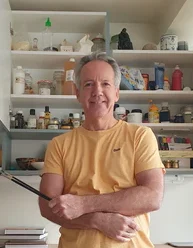
Written by James Carter, founder of Creative Flair.
James Carter is a painter and the founder of Creative Flair, a London arts platform that has interviewed more than six hundred artists and put the work of more than seventy on billboards across the city.
He trained at Goldsmiths in Fine Art and History of Art, and has spent the last five years inside the art world on both sides of the table: making the work, and helping decide which work gets shown. He runs one to one sessions with artists on exactly the problems in this book.
VISIBLE is what he has been saying in those sessions, gathered into one place.
None of which makes him the interesting one here. He is just the person who has walked the route and drawn the map. The artist doing the walking is you.
Painter
5 years in the art world
Founder, Creative Flair
Goldsmiths, Fine Art & History of Art
126k on Instagram, 229k across platforms
600+ artists interviewed, 70+ shown on London billboards
The end result
A year from now.
Two versions of next August. The difference between them is not talent, and it is not luck.
The year you did the work
Your work is photographed properly and it looks like what it is.
You have a site people can find in ten seconds.
You have applied to twelve things instead of two.
Somebody found you through a piece of press and bought something.
You have a list, and when you finish a body of work you simply tell them, and some of them buy.
None of that is fantasy. It is roughly what a year of deliberate work looks like.
Or the other year
The one where you keep making excellent work, keep waiting to be found, and arrive next August in exactly the same place.
Twelve months older.
Another twelve months of work facing the wall.
The same ten things, still unfixed.
The same quiet question underneath it all.
That is the real choice, and it is not really about the book.
Before you decide
The six things people say first.
“I am an artist, not a salesperson.”
Good. This is not a sales book. It is about making it possible for the right people to find work that deserves finding. There is one chapter on selling, and it is mostly about not feeling like a fraud.
“Is this just business advice for artists?”
No. Art has its own gatekeepers, its own logics and its own economics. A chapter from a habits book is not an art career. Every example here is from this world.
“I make sculpture, ceramics, photography, textiles.”
The principles hold across media. The examples lean towards painting, because that is what I make.
“I am only just starting.”
That is the best possible time. Most of this book is what I wish someone had handed me at the beginning.
“I have no time.”
Every chapter ends in a short recap and the whole book is indexed by problem, so you can open it at the thing that is stuck today and act on it this week.
“It is cheaper on Kindle.”
It is. What you get here is the designed book: a typeset PDF where the twenty seven diagrams sit where they belong, rather than reflowed Kindle text. Plus the workbook, free updates for life, and the audiobook when it lands. Amazon cannot deliver any of those. If price is the deciding factor, buy it on Kindle with my blessing. The words are the same.
The offer
What you get today.
An hour with me one to one is £225. This is five years of those hours, for £39 in one payment. The designed book, all twelve worksheets, and every future edition free for as long as the book exists.
VISIBLE
Second edition · ebook + workbook
£39Goes to £49 when the audiobook lands
✓VISIBLE, the complete second edition. 234 pages, thirty chapters, twelve appendices, twenty seven diagrams.
✓The designed PDF. Properly typeset, so the twenty seven diagrams sit where they should. Read it on a laptop or tablet, or print it and write in it.
✓The VISIBLE Workbook. Twelve worksheets you actually fill in: the audit, the statement, the target list, both pricing sheets, the content bank, the commission agreement as a signable one page form, the weekly money sheet and the quarterly review. Not sold anywhere else.
✓Free updates for life. You bought the second edition. You get the third free.
✓The audiobook, free, when it lands. Buy today and it arrives in your library at no extra cost.
✓No DRM. It is your copy, on every device you own.
“Thanks for the common sense approach that is broken down into steps that are very achievable. Totally worth buying this book.”
Jane, verified buyer
Prefer paper? VISIBLE is on Amazon in paperback, hardcover and Kindle.
The edition here is the only one that includes the workbook, lifetime updates and the audiobook.
Common questions
Things people ask.
Is this different from the first edition?
Substantially. Fourteen new chapters, including the whole of the audience, money and long game sections, plus art fairs, commissions, licensing and teaching. Twelve appendices instead of five. Every chapter now ends with a recap.
Why is it £39 right now?
Because the audiobook isn't out yet. When it lands the price goes to £49, and anyone who bought before then gets it free. For context: an hour with me one to one is £225, and the book is five years of that, on every channel, in a form you can keep coming back to. If two pages of it save you a year spent on the wrong things, it has paid for itself many times over.
Can I get it on Amazon?
Yes, on Amazon UK in paperback, hardcover and Kindle, and on Amazon US in paperback, hardcover and Kindle. This edition includes the twelve worksheet workbook, free updates for life and the audiobook when it lands, none of which Amazon can deliver.
What format is it in?
A designed PDF, typeset so the twenty seven diagrams sit where they should rather than reflowing. The workbook comes as a second PDF, built to be printed and filled in. Read them on a laptop, a tablet or a phone, or print them. There is no DRM, so it is your copy on every device you own.
What if I am not a painter?
The principles hold across media. The examples lean towards painting because that is what I make.
Will there be an audiobook?
Yes, and buyers here will get it free when it lands.
What exactly do I get, and how?
Immediately after checkout you get a download link on the confirmation page and the same link by email: the designed PDF and the VISIBLE Workbook. There is no DRM, so it is your copy on every device you own.
Do I have to pay again for the third edition?
No. Free updates for life. Buy the second edition and the third arrives free, the same way this one did for first edition readers.
Who is it for, and who is it not for?
For artists who are competent and unseen and would like to stop being the second thing. Early career, self taught or art school, painting or otherwise. It assumes you can already make the work. Not for you if you want a motivational book, or a get famous fast trick. Nothing in here works in a month.
How long does it take to get through?
A focused reader gets through it in a weekend. Most people read it more slowly, a chapter at a time, because each chapter produces a list of things to do and it makes sense to act on some of them before moving on. The problem index exists so you can also just open it at the thing that is stuck today.
Can I read a bit before I decide?
Yes. The whole first chapter is free. It names the ten things and lets you score yourself against them. Send me chapter one →
Read it for 30 days. If it doesn’t change how you go about getting seen, email me and I’ll refund you. More than 590 artists have already bought it here.
Still deciding? Read the whole first chapter free and score yourself against the ten things. If it does not tell you something true about your own situation, you have lost nothing.
Opening your secure checkout
Card, Apple Pay, Google Pay or Link
Before you go
Take chapter one with you.
Read it tonight. Score yourself against the ten things. Then decide whether the rest of the book earns its £39.
✓
On its way.
Chapter one is heading to your inbox now. You can also open it straight away below.
We use a few cookies to keep the site working. With your OK, we'd also use Google Analytics to see which guides help artists most, and Meta's pixel to measure our Instagram and Facebook ads. You can change your mind any time in Cookie settings.
Functional
Always active
The technical storage or access is strictly necessary for the legitimate purpose of enabling the use of a specific service explicitly requested by the subscriber or user, or for the sole purpose of carrying out the transmission of a communication over an electronic communications network.
Preferences
The technical storage or access is necessary for the legitimate purpose of storing preferences that are not requested by the subscriber or user.
Statistics
The technical storage or access that is used exclusively for statistical purposes.The technical storage or access that is used exclusively for anonymous statistical purposes. Without a subpoena, voluntary compliance on the part of your Internet Service Provider, or additional records from a third party, information stored or retrieved for this purpose alone cannot usually be used to identify you.
Marketing
The technical storage or access is required to create user profiles to send advertising, or to track the user on a website or across several websites for similar marketing purposes.
Please note:
This action will also remove this member from your connections and send a report to the site admin.
Please allow a few minutes for this process to complete.
 Skip to content