 Skip to content

Selling your art does not make you a sellout, and being broke does not make you pure. I say that plainly because so many artists I speak to are quietly stuck on this. They make the work, they share the work, and then they freeze at the exact moment they should say the simplest sentence in the whole process: this piece is available.
The fear is always the same. Nobody wants to sound like a salesperson. Nobody wants their friends and followers to roll their eyes. So the work stays in the studio, leaning against the wall, and the artist tells themselves that the right buyer will somehow find it on their own.
I first talked about this in a video on Instagram, and I want to go deeper on it here. These are the five ways I think about selling art without the cringe, with practical steps you can use this week.
Why does selling my art feel so uncomfortable?
Most of the discomfort comes from a story we have absorbed about what a real artist is supposed to be. In that story, the serious artist is above money, and anyone who talks openly about prices has somehow compromised. It is a romantic idea, and it is completely unhelpful.
Here is the reframe I come back to. Selling is not the opposite of being an artist. It is how you get to keep being one. Every sale buys you more paint, more canvas, more hours in the studio and more freedom to make the next piece. When you look at it that way, telling people your work is for sale is not vanity. It is part of the practice.
The other thing worth saying is that discomfort usually comes from doing selling badly, not from selling itself. Pushy, vague, apologetic or overly formal selling feels awful for everyone involved. The five approaches below are designed to feel natural, because they are built on things you already do.
How do I sell the story behind a painting, not just the painting?
People buy the meaning and the connection, almost never just the object. A painting on its own is paint on a surface. A painting that comes with the reason it exists becomes something a person wants to live with.
So tell people why you made it and what it is about. That does not mean writing an essay. It means giving them a way in. A few practical prompts to help:
- What were you thinking about when you started this piece?
- What made you choose this subject, this colour, this moment?
- What do you hope someone feels when they stand in front of it?
Answer one of those questions in two or three sentences and put it next to the image every time you share the work. You are not convincing anyone. You are letting them understand what they are looking at, and understanding is what turns admiration into wanting.
Should I show my art on a wall before I sell it?
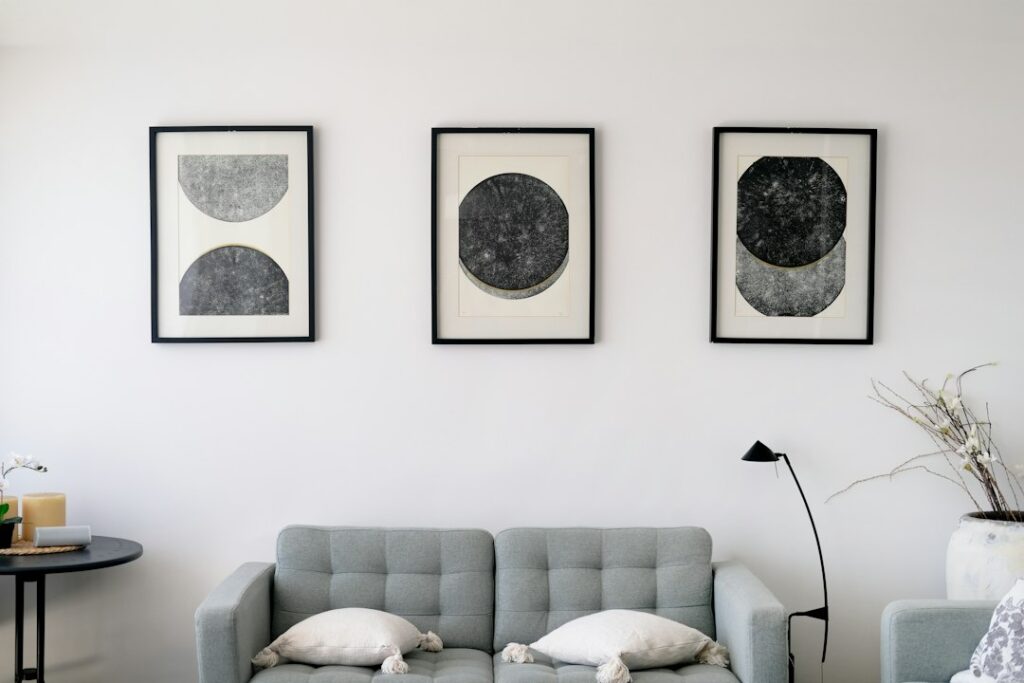
Yes. Show the work in a real room. On a wall, above a sofa, in your hands. A flat photograph against a white background asks people to admire the piece from a distance. A photograph of the piece in a real space asks them to picture owning it.
This is one of the simplest changes you can make, and it does a lot of quiet selling for you. Some ways to do it:
- Hang the finished piece somewhere in your home and photograph it in natural light.
- Hold smaller works in your hands so people instantly understand the scale.
- Photograph the piece next to everyday objects, a chair, a shelf, a plant, so the size reads clearly.
Keep your clean, straight on documentation shot as well, because you will need it for applications and your website. But when you are telling people a piece is available, lead with the image that lets them imagine it in their own life.
Who should I sell my art to first?
Sell to the people already watching. The ones who follow your process are not strangers you have to convince. They are warm. They have watched the piece develop, they have commented on the early stages, and some of them have been quietly hoping it might be for sale.
This changes the whole emotional weight of selling. You are not cold calling. You are just telling people who already care that the work is available. That is a very different conversation, and it is a lot easier to have.
In practice, that means sharing the journey of a piece before you share the price. Post the sketch, the underpainting, the detail you struggled with. Then, when it is finished, the people who have been along for the ride already have a relationship with it. If you want to think more about why being seen is not the same as selling out, I wrote about it in being visible is not selling out.
How do I make it easy for people to buy my art?
Make it stupidly easy to buy. Most artists hide the fact that anything is for sale. They post a beautiful image with no mention of availability, no price, no way to ask, and then wonder why nobody buys. Confusion kills more sales than price ever does.
Say it plainly. This piece is available, here is how to get it. That one sentence removes the biggest barrier a potential buyer faces, which is not knowing whether they are even allowed to ask.
A simple checklist for every piece you are selling:
- State clearly that it is available.
- Give the size and the medium.
- Give the price, or tell people exactly how to find it.
- Tell them the one action to take, whether that is sending you a message, clicking a link or replying to an email.
If a buyer has to work out how to buy from you, many of them simply will not. Every step you remove is a step they do not have to take.
What should I actually say when I tell people my art is for sale?
Talk like a human, not a press release. Drop the art speak. Say it the way you would tell a friend why you love this one.
A lot of artists reach for formal, inflated language when money is involved, as if sounding important will justify the price. It does the opposite. It creates distance at exactly the moment you want closeness.
Compare these two approaches. One reads like a gallery wall label full of abstract nouns. The other sounds like you, standing next to the painting, saying this is one of my favourites, I painted it over a few weeks last winter, and it is available now if it speaks to you. The second one is warmer, clearer and far more likely to start a conversation.
A good test is to read your post out loud. If you would never say those words to a friend over coffee, rewrite them until you would. Finding the exact words to use when you tell people your work is available is a big part of what I cover in my book, VISIBLE, because it is the moment where most artists stall.
Putting the five together
None of these steps ask you to become someone else. Telling the story, showing the work in a room, talking to the people already watching, making it easy to buy and speaking like yourself are all things you are capable of doing today. Pick the next finished piece in your studio and try all five on it.
Selling is not the opposite of being an artist. It is how you get to keep being one. Say the sentence. This piece is available. Then let the right person answer.
You do not have to wait to be found.
VISIBLE covers the part nobody teaches: how galleries, open calls, pricing, audience and money actually work, and what to do about each one. 234 pages, with twelve worksheets you fill in and use.
- Rated 4.9 from 15 reviews
- 650+ artists have a copy
- Instant download, PDF and workbook
Usually

Responses