 Skip to content
Here is something almost no artist knows. There is a huge pot of money set aside, by law in a lot of places, specifically to pay artists to make art for public spaces. And most artists never even look for it.
We spend so much energy chasing galleries, refreshing Instagram and waiting to be discovered, while councils, developers and public bodies are quietly commissioning artists every year. It is called public art, and once you understand how it works, you start seeing opportunities everywhere: in the new library down the road, the hospital extension, the park that is being redesigned. I first talked about this in a video on Instagram, and the response told me how few artists realise this money exists. So here is the fuller version.
What counts as public art?
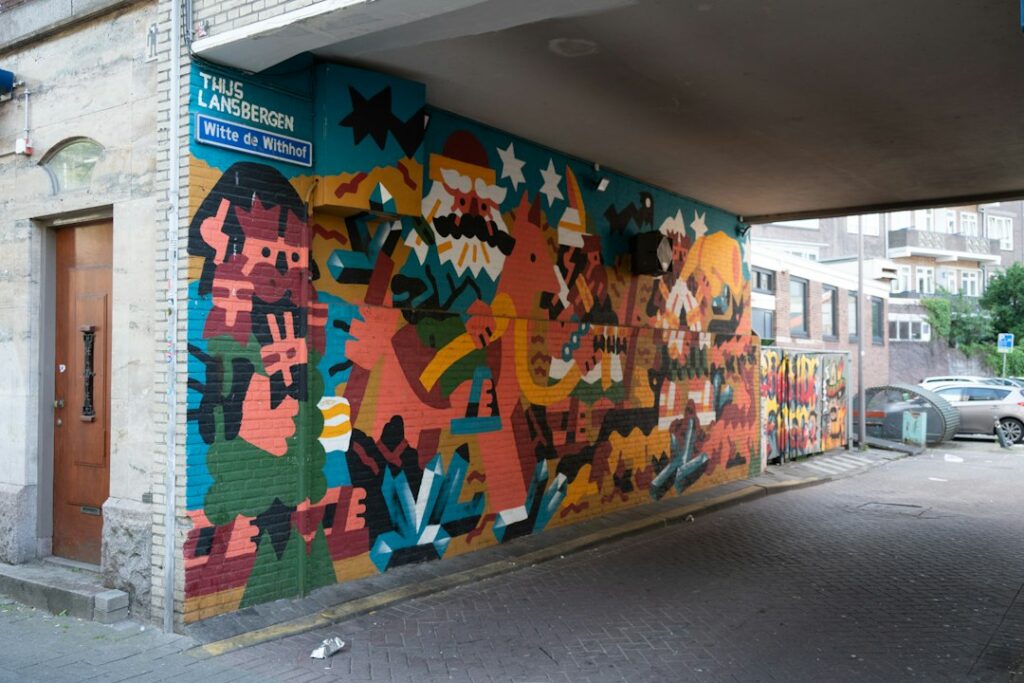
When most people hear the phrase, they picture a giant bronze sculpture in a town square or a mural covering the side of a building. Those are part of it, but public art is a lot bigger than murals.
It includes paintings, sculptures, illustrations and photography. It includes art on park benches and trail signs. It shows up in schools, hospitals, libraries, parks and new developments. Every one of those places has walls, corridors, entrances and outdoor spaces that someone has to fill, and increasingly they are filled with commissioned work by living artists.
There are literally thousands of these commissions every year, for artists at every level, including complete beginners. That last part matters. Public art is not a closed club reserved for names you already know. Plenty of projects are small, local and designed to bring new artists in.
If you are a figurative painter like me, it is easy to assume this world is for sculptors and muralists. It is not. A hospital wants calm, considered work for its waiting areas. A library wants images that speak to its community. A school wants something that reflects the children who walk past it every day. Your practice may fit far better than you think.
Where does the money for public art come from?
This is the bit that surprises people. Loads of places have what is called a percent for art scheme. The idea is simple: around one percent of the budget of every big construction project has to be spent on art.
Think about what that means. On a small build, one percent is modest. On a big build, a new hospital, a housing development, a transport project, that one percent is serious money. And it has to go somewhere. It is not a favour or a charity. It is a line in the budget that exists specifically to pay artists.
That changes how you should approach it. You are not asking for a handout. You are offering to fill a role that has already been funded. The commissioners need artists as much as artists need the work.
How do I find public art commissions near me?
Start by searching “percent for art” or “public art commission” plus the name of your city or region. That is where these opportunities are listed, and you will often find that your local authority has a page dedicated to them.
Then check your local arts council. Arts councils and regional arts bodies regularly share commissions, calls for artists and briefs from public bodies. Sign up to their newsletters so the opportunities come to you rather than you having to hunt for them every week.
A few practical habits make this much easier:
- Set up a simple search routine. Once a week, run the same searches and note anything new in a spreadsheet with the deadline, the budget and what the brief asks for.
- Watch for new developments. When you hear about a big building project in your area, look up whether it includes an art commission. Many do.
- Read the briefs even when they are not right for you. Every brief teaches you what commissioners look for and the language they use, which makes your next application stronger.
Do I need experience to apply for a public art commission?
Not necessarily, but you do need to be strategic. Public art commissions usually want a short proposal, so the smartest move is to start with the smaller, local ones and build a track record.
Here is why local is your advantage. A lot of programmes reserve most of their commissions for local artists. That means the artist who lives in the area, knows the community and can show up to a site visit has a real edge over someone with a longer CV from somewhere else. Your postcode can work in your favour.
When you write a proposal, keep it focused on the brief rather than on yourself. A useful structure looks like this:
- What you will make. Describe the piece clearly: the medium, the size and where it will sit.
- Why it suits this place. Show that you have understood the site and the people who will see the work every day.
- How you will deliver it. Give a simple timeline and show that you have thought about practicalities like materials and installation.
- Evidence you can do it. A handful of strong images of your existing work, presented well.
Each small commission you complete becomes evidence for the next, slightly bigger one. That is how a track record is built, one project at a time. If you want help structuring applications more generally, my guide to grants for emerging artists covers how to prepare an application that funders take seriously, and much of it applies here too.
Is public art only for big sculptures and murals?
No, and this is where a lot of artists count themselves out too early. Don’t count yourself out on scale.
Councils commission benches, utility boxes and small murals, not just giant sculptures. A painted utility box on a high street, a series of images along a walking trail, a set of panels for a community centre: these are real commissions, paid properly, and they are exactly the kind of projects that let you learn how public art works without the pressure of a huge budget.
Everyone starts somewhere. The artists you see winning large public commissions almost certainly began with something modest. If a small brief appears in your area and your work could genuinely answer it, apply. The worst outcome is that you learn something and write a better proposal next time.
Why public art is worth your time
A public commission pays you properly. It puts your work in front of a whole community, not just the small group who walk into a gallery on a given afternoon. And it gives you a line on your CV that changes everything, because it shows that a public body trusted you with a budget, a site and a deadline, and that you delivered.
That credibility travels. It strengthens your next grant application, your next gallery pitch and your next conversation with a collector. Public art is not a side road away from a serious career. For many artists it is one of the most direct routes into one.
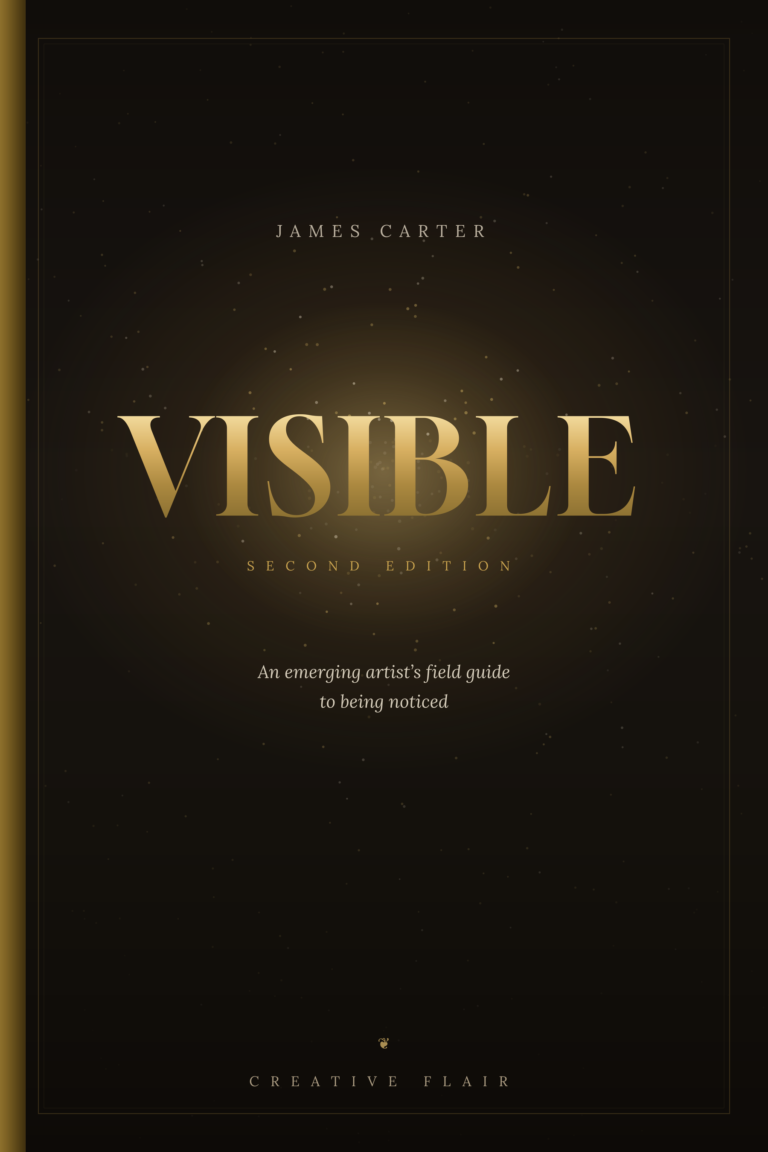
Getting seen and getting paid on your own terms, without waiting for permission, is the whole idea behind my book VISIBLE. Public art is one of the clearest examples of that principle in action.
Most artists just never knew the money was there. Now you do. Run that search for your city this week, find one brief that fits, and put your hand up. And if you know an artist who deserves to get paid for their work, send this to them.
You do not have to wait to be found.
VISIBLE covers the part nobody teaches: how galleries, open calls, pricing, audience and money actually work, and what to do about each one. 234 pages, with twelve worksheets you fill in and use.
- Rated 4.8 from 5 reviews
- 620+ artists have a copy
- Instant download, PDF and workbook
Usually
Responses