 Skip to content


You spend days on a painting. You fight with it, nearly give up on it, finally get it right. Then you photograph it, post it, and write a caption that kills it. Just the title. Or “new work”. Or “oil on canvas, 40 by 40”. And then you wonder why nobody comments, nobody messages, and nothing sells.
The painting was never the problem. The caption was. Most artists treat the caption as an afterthought, a label stuck under the real thing. But the caption is where a stranger decides whether to care, whether to stay, and whether to ask about buying. So I want to give you a formula you can steal. It has four parts and it takes about thirty seconds to write.
I first talked about this in a video on Instagram, and it is one of those small changes that makes a real difference to how people respond to your work.
Why does an art caption matter if the painting is good?
Because a good painting on a phone screen is one square among thousands. People scroll past beautiful work all day. What makes them stop and actually engage is a reason to care about this particular piece, and the image alone rarely gives them that.
Think about what a caption like “new painting, oil on canvas, 40 by 40” actually tells someone. It tells them the medium and the size. That is useful information for a buyer who is already interested, but it does nothing to make them interested in the first place. It reads like a catalogue entry, and nobody falls in love with a catalogue entry.
A caption is your chance to speak for the work when you are not standing next to it. If you were at an exhibition and someone paused in front of your painting, you would not just recite the dimensions. You would tell them something about it. Your caption should do the same job.
How do you write a first line that stops the scroll?
The first part of the formula is a first line that makes someone stop. Not “new painting”. Something human.
For example: “This one nearly went in the bin three times.” That line works because it is honest, it is relatable to anyone who has ever made anything, and it makes you want to know what happened next. It also tells the reader there is a real person behind the work, not a brand.
People read the first line and decide whether to care. On Instagram, the caption is often cut off after a line or two, so that opening is doing almost all the work of getting someone to tap “more”. Give them a reason to.
A few practical ways to find your first line:
- Say what nearly went wrong, or what surprised you while painting it.
- Say what you were thinking or feeling when you started.
- Say one specific detail about where the idea came from.
- Write it the way you would say it out loud to a friend, then cut anything that sounds formal.
Only use what is true for that piece. The power of the first line comes from it being real.
What should the story part of an art caption say?
The second part is the story. One or two sentences on what the piece is actually about, or the moment behind it.
This matters because people do not fall for the paint. They fall for the meaning. Two paintings can be equally well made, and the one people remember is the one they understood something about. When you share the meaning, you give the viewer a way into the work, and a reason to feel connected to it.
Keep it short. This is not your artist statement and it is not an essay. If you find yourself writing a paragraph of theory, stop and ask what you would say if someone gave you ten seconds. Usually that is the line you need. Good questions to answer here:
- What is this piece of?
- Why did you want to paint it?
- What moment, place or memory is behind it?
Plain language always beats clever language. If a sentence would confuse a friend who knows nothing about art, rewrite it until it would not.
Should you say your art is for sale in the caption?
Yes. This is the third part of the formula, and it is the one almost everyone skips.
If the piece is for sale, say so. “Available now.” Or “send me a message if you would like it.” That is all it takes.
People cannot buy what they do not know is for sale. It sounds obvious, but so many artists post work they would happily sell and never mention it. They assume that if someone wants it, they will ask. Most people will not. They will assume it is already sold, or not for sale, or too expensive to ask about, and they will keep scrolling.
Telling someone your work is available is not pushy. It is information. You are removing a question they might feel awkward asking. A few ways to phrase it that feel natural:
- “This one is available now.”
- “Send me a message if you would like it for your home.”
- “The original is available, details in my bio.”
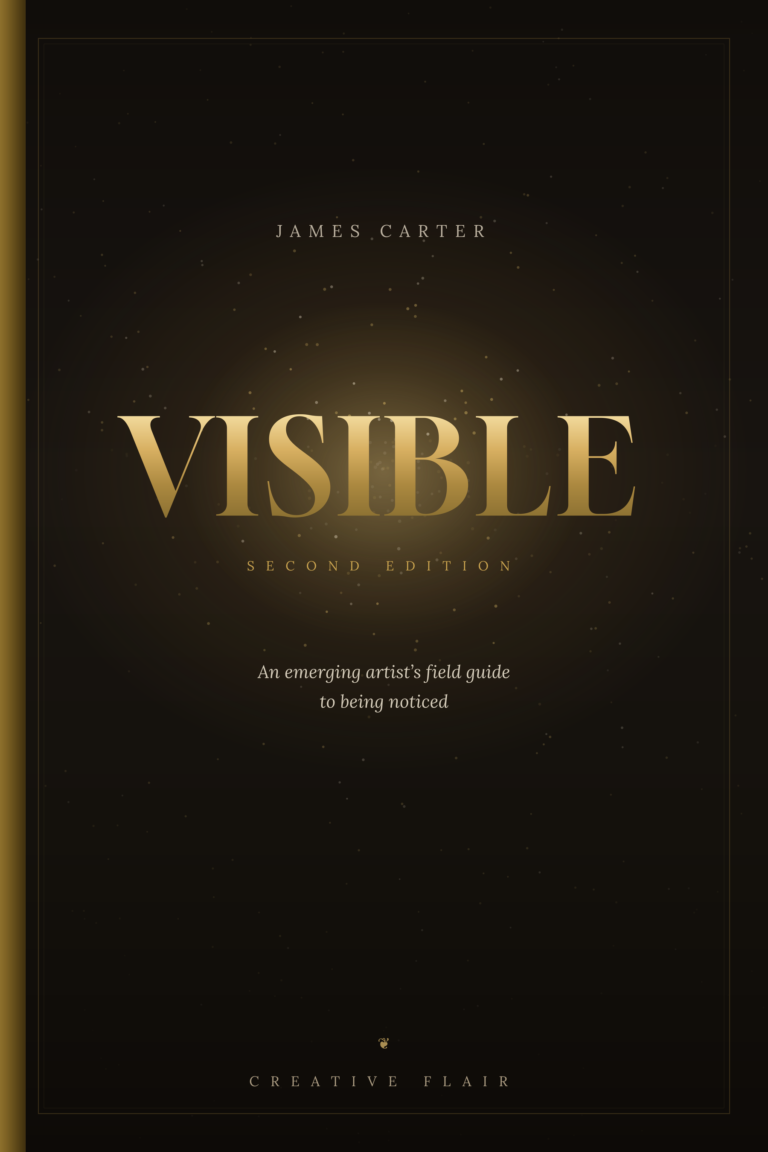
If you struggle with feeling like a salesperson when you mention prices or availability, you are not alone, and it is a big part of what I wrote about in my book VISIBLE, which covers the whole way you talk about your work so it actually sells.
Why should you end an art caption with a question?
The fourth part is to end with a question. For example: “Where would this hang in your home?” Or: “What does it make you think of?”
A question turns a silent scroll into a comment. Without one, even people who like the work tend to look and move on. With one, you have given them something easy to respond to, and many of them will.
Comments matter for two reasons. First, they push your post out to more people, because engagement is what tells the platform the post is worth showing. Second, every comment is the start of a conversation with someone who has already shown interest in your work, and conversations are where sales begin.
The best questions are easy to answer and connect back to the work. “Where would this hang in your home?” is especially useful because it gets the reader picturing the painting on their own wall, which is exactly where you want their imagination to go.
What does an art caption that sells actually look like?
Here is the difference in practice. Instead of:
“New painting, oil on canvas, 40 by 40.”
You write something like:
“This one nearly went in the bin three times. It is the view from my nan’s kitchen, painted from memory. It is available now, and I would love to know where you would hang it.”
Look at what the second version does. The first line stops the scroll. The second sentence gives the story and the meaning. The third tells the reader they can own it. And the ending invites a reply. All four parts, in three short sentences.
Same painting. Completely different result.
To make this a habit, try this simple routine every time you post:
- Write one honest, human first line about the piece.
- Add one or two sentences about what it means or where it came from.
- Say clearly whether it is available and how to ask about it.
- Finish with one easy question.
- Read it back and cut anything that sounds like a catalogue.
You can still include the medium and size if you like. Just put them after the parts that make people care, not instead of them.
Your captions are part of how your work gets seen, and getting seen consistently is what builds an audience over time. If you want to go further with that, my article on how to get followers as an artist picks up where this leaves off.
You have already done the hard part by making the work. Do not let a lazy caption undo it. Steal this formula, use it on your next post, and give your painting the introduction it deserves. And if you know an artist whose captions are just the title and the size, send this to them.
You do not have to wait to be found.
VISIBLE covers the part nobody teaches: how galleries, open calls, pricing, audience and money actually work, and what to do about each one. 234 pages, with twelve worksheets you fill in and use.
- Rated 4.8 from 5 reviews
- 620+ artists have a copy
- Instant download, PDF and workbook
Usually



Responses