Skip to content

Journal Art Tips
Art Pricing Mistakes: Why Most Artists Price Like a Hobby
Most artists price their work like a hobby. Here are the five art pricing mistakes I think every emerging artist needs to stop making, and what to do instead.

In this article 7 sections
- Why does my art pricing feel like guesswork?
- Mistake one: are you pricing what you think people will pay?
- Should artists offer discounts when someone asks for their best price?
- Why do my prices need to be the same everywhere?
- Should I price my art based on the cost of materials?
- How often should artists raise their prices?
- What does pricing like a professional actually look like?
Most artists price their work like a hobby. You see it everywhere: brilliant paintings sitting next to price tags that say “please don’t think I’m being cheeky”. The work is professional. The pricing is not. And collectors notice the difference long before they notice your brushwork.
Here is the uncomfortable truth I keep coming back to. The market does not reward the artists who make the best work. It rewards the artists who price like they belong in the room. Pricing is not a number you pluck from the air at the last minute. It is a signal. It tells a buyer how seriously you take your own practice, and therefore how seriously they should take it too.
I first talked about this in a video on Instagram. In this article I want to go further and walk through the five art pricing mistakes I think every emerging artist needs to stop making, and what to do instead.
Why does my art pricing feel like guesswork?
Because for most artists, it is guesswork. Nobody hands you a price list when you leave art school, and original art has no obvious market rate the way a loaf of bread does. So artists fill the gap with feelings. They look at a finished painting, feel a wave of doubt, and pick whatever number feels least embarrassing to say out loud.
The artists who get taken seriously do something different. They treat pricing as strategy rather than guessing. They decide on a structure in advance, they apply it to every piece, and they stop renegotiating with themselves each time a painting comes off the easel. That shift alone removes most of the stress. If you want the nuts and bolts of building a starting price, I have written a fuller guide on how to price your art without underselling yourself. Here, I want to focus on the habits that quietly undo all that good work.
Mistake one: are you pricing what you think people will pay?
This is the most common mistake of all. An artist imagines a buyer who might hesitate, so they lower the price before anyone has even seen the work. They are negotiating against a person who does not exist.
Your job is to price what the work is worth, not what you hope someone will tolerate. When you price down to meet imagined resistance, you are not making the work more accessible. You are teaching collectors that your work is worth less. And once a buyer has learned that lesson, it is very hard to unteach.
What to do instead:
- Set your prices from your structure and your practice, not from a fear of rejection.
- Remember that the right buyer is not looking for the cheapest painting. They are looking for the right painting.
- If a price feels uncomfortable to say, practise saying it out loud until it does not. The discomfort is yours, not the buyer’s.
Should artists offer discounts when someone asks for their best price?
Not publicly, and not by default. The moment someone comments “what’s your best price?” and you reply with a discount, you have told every other collector watching that your prices are negotiable. The next person will ask too. And the one after that.
Hold the price. If you choose to offer a discount, it happens privately, for a reason, and on your terms. It is never your automatic response to a question.
What to do instead:
- Reply to price questions with the price, warmly and without apology.
- Keep any flexibility for private conversations, for example a returning collector or someone buying more than one piece.
- Never post a discount in a public comment thread. Other buyers read those replies.
Why do my prices need to be the same everywhere?
Inconsistent pricing is one of the fastest ways to lose a sale, and often two. Picture the same artist showing a 50cm canvas at £800 in one place and £1,200 in another. The collector who sees both does not think “bargain”. They think “which one is real?” and they walk away from both.
Consistency across sizes, mediums and platforms is what makes your prices believable. If a buyer sees your work on your website, at an open studio and on social media, the logic should be the same in every place.
What to do instead:
- Build a simple structure that links size and medium to price, so every piece follows the same rule.
- Write it down and keep it somewhere you can check before you list anything.
- Audit every place your work is for sale and bring any outliers into line.
- Stick to it everywhere, including when a friend asks.
Should I price my art based on the cost of materials?
Material cost is the floor, not the price. You are not a printer. If you work out your price by adding up canvas, paint and a bit extra, you are pricing your work as if it were a product made by a machine.
The value of a painting is not the paint. It is the years of practice behind it, the body of work it belongs to, and the reason this particular piece exists at all. Materials tell you the lowest number you can possibly charge without losing money. They tell you nothing about what the work is worth.
What to do instead:
- Know your material costs so you never go below them, then treat that figure as a minimum rather than a starting point.
- Price within the context of your whole body of work, not piece by piece in isolation.
- Think about what a buyer is really paying for: your eye, your skill and your voice.
How often should artists raise their prices?
Regularly. Never raising your prices is the fifth mistake, and it is a quiet one. Stagnant pricing signals a stagnant career. If your prices have not moved in years, a collector can only assume your work has not moved either.
The best emerging artists raise their prices yearly, regardless of sales volume. That last part matters. Many artists wait until they have sold out before they feel allowed to charge more. But a steady, modest rise tells the market that the work is appreciating, and it rewards the people who bought from you early.
What to do instead:
- Pick a fixed point in the year to review and raise your prices, so it becomes routine rather than a crisis.
- Raise prices in modest steps, so the change feels steady rather than sudden.
- Never lower your prices to make a sale. Raising them is a signal of confidence. Dropping them is a signal of doubt.
What does pricing like a professional actually look like?
Put the five fixes together and a clear picture emerges. A professional artist prices from a structure rather than from fear. They hold the price in public. They keep it consistent wherever their work appears. They know their costs but do not let materials set their value. And they raise their prices on a regular rhythm.
None of this needs a gallery’s permission or a famous name. It needs a decision. Most artists treat pricing as guessing. The artists who get taken seriously treat it as strategy.
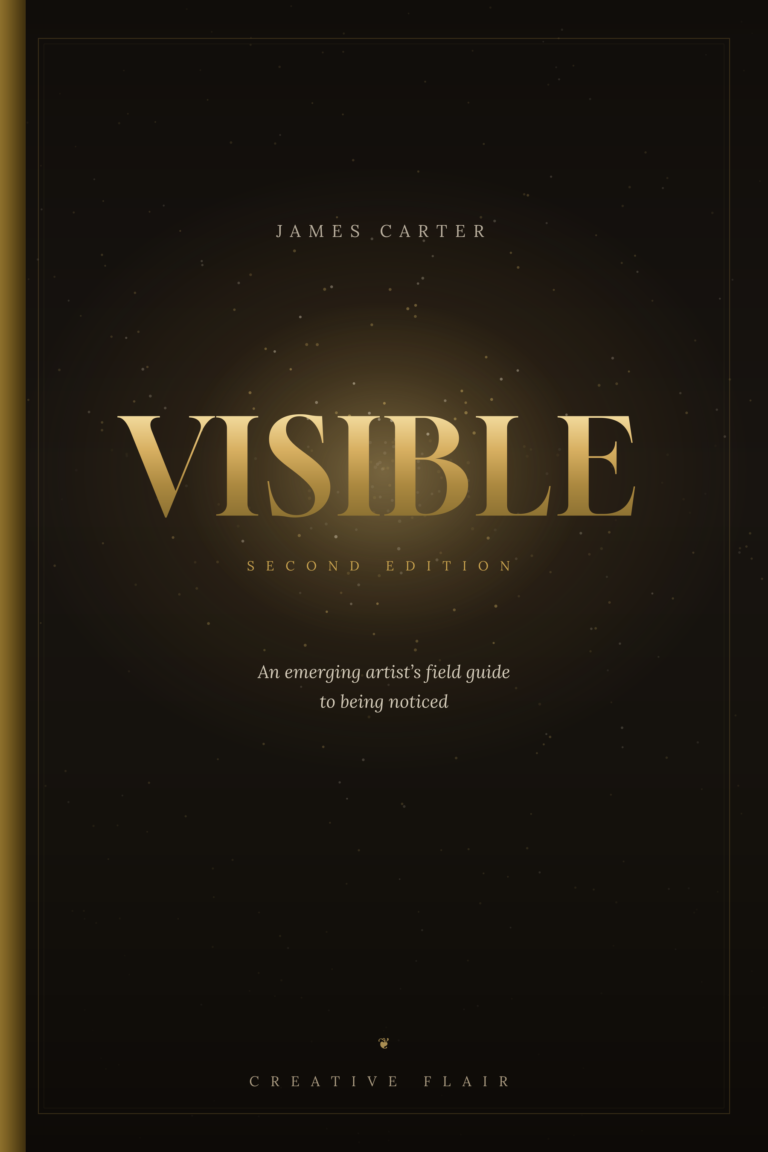
If you want to go deeper, there is a full chapter in my book VISIBLE on pricing structures and how to build them properly for the emerging market.
So here is my challenge for this week. Look at your current prices, honestly, and ask which of these five mistakes you are making. Fix one. Then fix the next. Your work already belongs in the room. Your prices should say so too.