









Ask most people why is modern art so expensive and you will get a shrug, maybe a joke about a banana taped to a wall. And yet in 2017 a single painting sold for $450.3 million at Christie’s in New York. That painting, Leonardo da Vinci’s Salvator Mundi, had changed hands in 2005 for around $10,000. So what happened in between? The short answer is that the price of art has very little to do with paint, canvas, or the hours spent in a studio. It has almost everything to do with scarcity, reputation, and the small circle of people willing to pay.

Why is modern art so expensive? Start with scarcity
Every original artwork is, by definition, one of a kind. There is only one Salvator Mundi. When a living artist dies, the supply of their work is fixed forever, and demand does the rest. Because the object cannot be reproduced, ownership becomes a form of exclusivity that money alone cannot always buy.
Scarcity is the oldest lever in the market. But it only matters when people actually want the thing that is scarce. A rare painting by an artist nobody has heard of is still cheap. So scarcity works alongside a second, more powerful force: reputation.
Reputation and the power of the artist’s brand
In today’s art world, the name attached to a work often matters more than the work itself. Collectors are not just buying an image. They are buying a story, a signature, and the confidence that other people will agree the thing is valuable.
This is why an artist with a rebellious streak or a compelling backstory tends to command higher prices. Think of how Frida Kahlo’s biography feeds the demand for her paintings, or how Banksy’s anonymity became part of his brand. The art becomes a token of something bigger than itself.
Reputation is built slowly, through museum shows, critical writing, and decades of steady sales. When those things line up, an artist crosses into a category the trade calls “blue chip”.
Blue chip art and how the market keeps score
Blue chip art refers to work by artists whose cultural and financial value has been proven over many years. These are the museum-backed names that reliably fetch the highest prices at Christie’s, Sotheby’s, and Phillips. Because their track record is long, buyers treat them as a relatively safe place to park money.
And that is really the heart of the matter. A great deal of expensive art is bought as an investment. Collectors expect the value to rise, so the purchase is less about hanging something beautiful on a wall and more about holding an asset that might appreciate. In fact, the art market has become closely tied to the fortunes of the very wealthy.
The distribution tells the story. Roughly the top 20 per cent of artists account for about 80 per cent of the market by value, while the remaining 80 per cent of artists share what is left. High prices, then, are driven by a small group of celebrated names, not by the field as a whole. If you want to understand the forces that shaped this modern taste, our piece on the Bauhaus movement shows how ideas about art and design filtered into the mainstream.
How galleries quietly set the price
Here is something that surprises people. Top galleries often keep primary prices lower than the market could bear. Why would they leave money on the table? Because control matters more than a quick profit.
These galleries decide who is allowed to buy, at what price, and under what conditions. Waiting lists for an in-demand artist can stretch for years. By keeping prices deliberately suppressed, they encourage a broad group of respectable collectors to take part and discourage pure speculators who might flip the work and crash its value.
As a result, getting the chance to buy can be as difficult as affording the piece. The gallery is not just selling art. It is protecting a reputation, and the price is one of its tools.
The theatre of the auction house
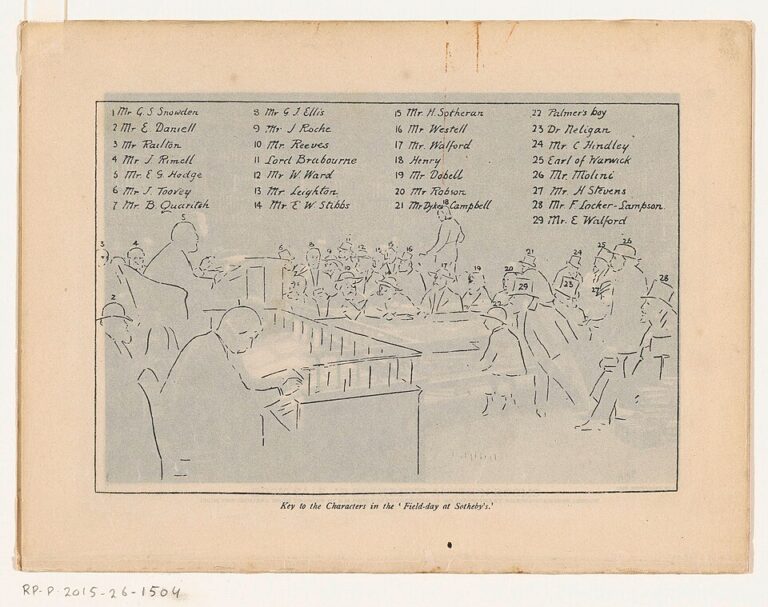
Auctions are where the eye-watering numbers happen, and they are carefully staged. The order of the lots, the printed estimates, the timed pauses, and a room seeded with confident bidders all serve one purpose. They accelerate competition.
Each bid is a public signal. When one billionaire raises a paddle, others read it as proof that the work is desirable, and appetite grows. This is why a single record sale can lift the value of every similar piece that follows. The auction does not just discover a price. It manufactures momentum.
The result is not just price discovery but momentum creation, each bid a public signal that inflates appetite.
The Salvator Mundi sale is the clearest example. The painting was heavily restored and its attribution to Leonardo remains disputed, yet the drama of the bidding war carried it past $450 million. You can trace the full list of these staggering figures through Wikipedia’s record of the most expensive paintings ever sold.
Why is modern art so expensive when the skill seems simple?
This is the question that frustrates people most. A blank canvas with a single stripe sells for millions, while a technically dazzling portrait by an unknown painter sells for a few hundred pounds. It feels unfair, and in a sense it is.
The truth is that technical skill is only one ingredient, and often not the decisive one. Contemporary value is driven by ideas, timing, publicity, and the social status that comes with owning the right name. Buying a famous work has become a form of conspicuous consumption, a way of signalling wealth and taste at the same time.
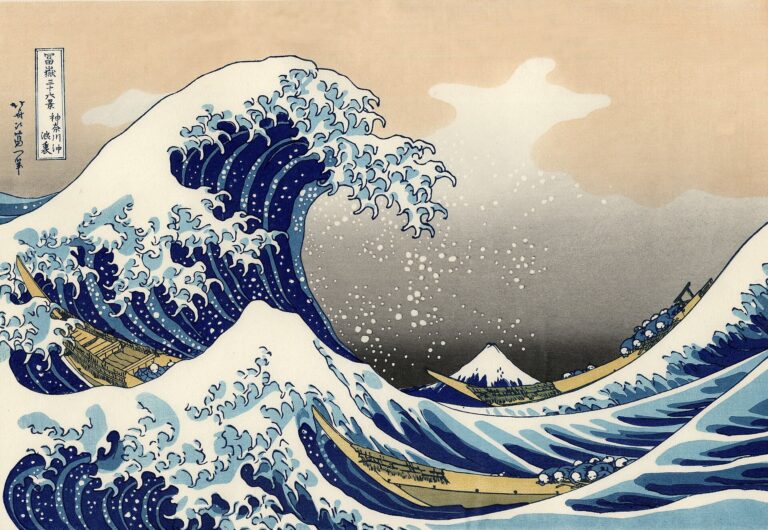
That does not mean the art is empty. Plenty of expensive work is genuinely inventive and historically important. But the price tag reflects the market around the object as much as the object itself. For a reminder that older art plays by similar rules, look at how a Japanese woodblock print became a global icon in our story on The Great Wave off Kanagawa.
What it means for the rest of us
If the headline prices feel absurd, that is because they belong to a rarefied corner of the market. Most artists, even successful ones, never see numbers anywhere near them. The billionaire auction is the exception, not the rule.
So the next time you read that a painting sold for the price of a small island, remember what you are really seeing. It is scarcity meeting reputation, amplified by investment money and a room designed to push people to bid higher. Understanding that machinery does not make the art any less interesting. If anything, it makes the whole spectacle easier to enjoy. For a sense of how the trade tracks these swings, the The Art Newspaper follows the market closely.
Modern art is expensive because a small number of people have decided it should be, and because the systems around it are built to keep it that way. That is a less romantic answer than “genius”, but it is a far more accurate one.